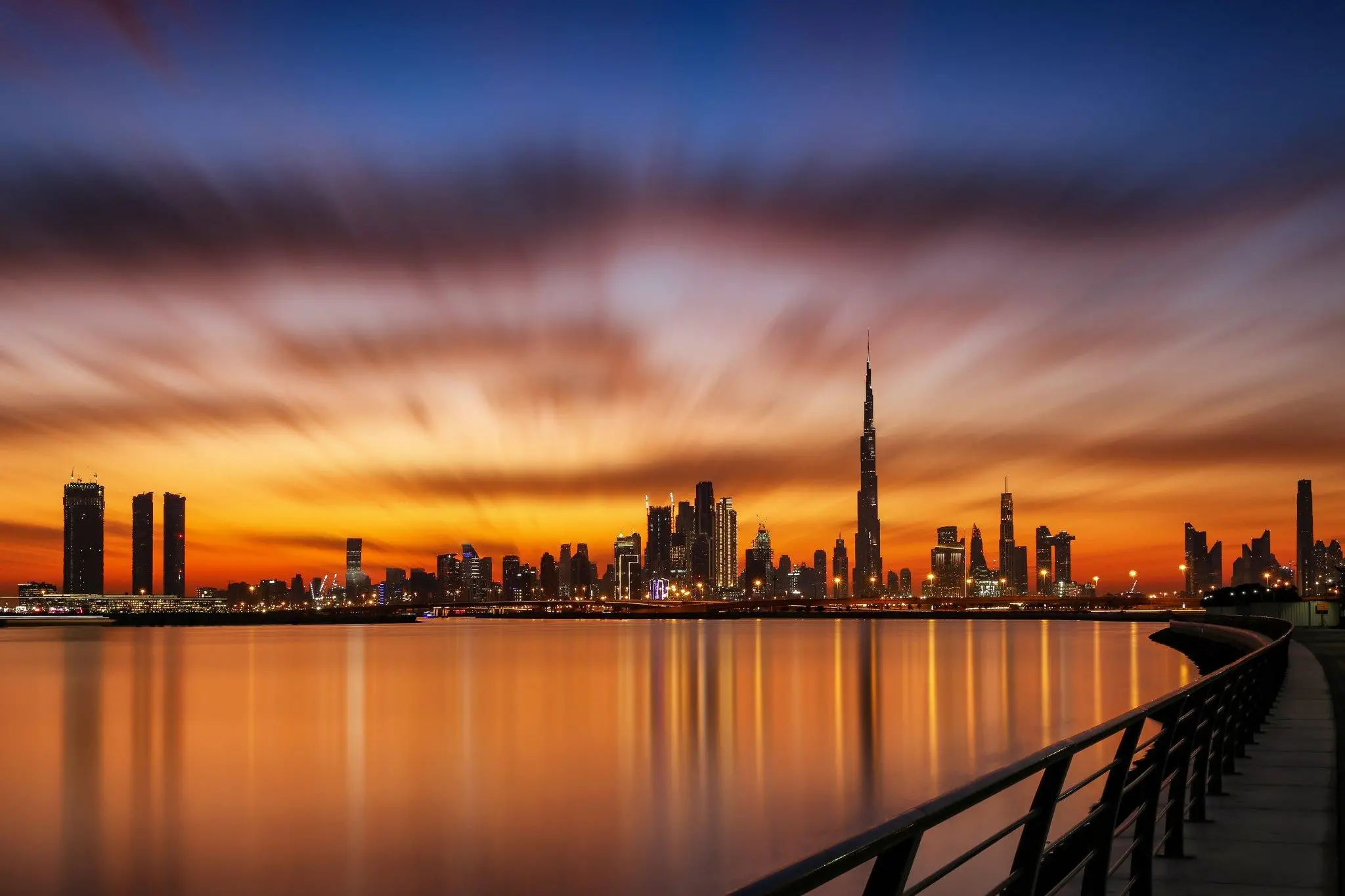
Dubai Villas 2026: The Direct Answer
Dubai villas 2026 are outperforming the broader residential market by a significant margin, with ValuStrat projecting 17.7% capital appreciation for villas versus a 10% blended city average — a spread that reflects the structural impossibility of adding new supply to established low-density communities. Freehold villa values across Dubai have already climbed 206% since the pandemic, according to Engel & Völkers, yet the market is not in speculative territory: end-user demand from Golden Visa holders and permanent residents now drives the majority of transactions above AED 4M. The communities with the strongest outlook are Palm Jumeirah, Emirates Hills, Dubai Hills Estate, Jumeirah Bay Island, Al Wasl, and Mohammed Bin Rashid City — all mature zones where limited resale discounting has held even as the wider market becomes more price-sensitive. Buyers treating Dubai as a second home or primary residence, not a short-term trade, have by far the most to gain.
Dubai villas 2026 represent one of the most decisive divergences we have tracked in this market. While the apartment segment absorbs the bulk of new supply risk — thousands of units are scheduled for delivery this year — the villa segment is being shaped by an entirely different force: an irreplaceable scarcity of land in the communities that matter most.
In our experience advising buyers across Dubai's freehold villa communities, the question has shifted. Two years ago, clients asked us whether Dubai villas were a safe investment. Today, they ask which community to prioritise — because they have already made up their minds. That confidence is not irrational. It is data-supported.
Sources: Engel & Völkers Dubai 2026 · ValuStrat Dubai Real Estate Market Outlook 2026 · Property Finder Group · January 2026
Why Dubai Villas 2026 Are Outperforming Every Other Asset Class
Dubai villas 2026 are not outperforming because of hype. They are outperforming because of a structural reality that most analysis glosses over: you cannot build more Palm Jumeirah. You cannot expand Emirates Hills. Al Wasl is not getting wider. The supply of land in Dubai's established, low-density, amenity-rich villa communities is effectively fixed — and the demand pressing against it is not.
Contrast this with the apartment market. Dubai has over 50,000 new residential units currently under construction, the overwhelming majority of which are apartments. The developers who launched these projects did so into a window of extraordinary global demand, and that demand has not evaporated — but when supply scales this rapidly, it eventually creates compression in margins. Apartments are far more replicable. Villas in mature communities are not.
The Three Structural Advantages of Dubai Villas 2026
Dubai villas 2026 benefit from three compounding structural advantages that are absent in the apartment segment. First, land scarcity in blue-chip communities creates natural price floors. Second, the profile of the villa buyer has fundamentally changed — the end-user, not the speculator, now dominates. Third, the Golden Visa has reset the holding horizon of the typical buyer, replacing the short-term investor with someone committed to living in and improving their property for a decade or more.
"Established villa communities in Dubai continue to demonstrate price resilience that is difficult to replicate in higher-supply environments. The land constraints are real and structural, not temporary."
Engel & Völkers Dubai Residential Market Report · 2026The data bears this out. ValuStrat's Dubai Price Index for residential property shows villa values appreciated at nearly double the rate of apartments in 2024 and are forecast to continue that divergence through 2026. The communities that have historically commanded a premium — Palm Jumeirah, Emirates Hills, Dubai Hills Estate — are not softening. According to Gulf News, these areas have shown limited tolerance for discounts even as the wider market becomes more price-sensitive.
Dubai villas 2026 also benefit from a rental yield premium. Gross yields in established villa communities typically range from 4.5% to 6.5%, compared to 4%–5.5% for comparable-value apartments. In areas like Al Wasl and Jumeirah, short-term rental demand from corporate tenants and diplomatic communities pushes effective yields toward 7%–8% annually.
The most overlooked aspect of the Dubai villas 2026 story is the rental market. Rental inflation for villas across Dubai reached double digits in 2024 and has not fully normalised, because the existing villa stock cannot absorb the number of families now seeking long-term residency. This supply-demand gap in the rental market directly supports capital values — a villa that commands AED 500K/year in rent is not subject to the same capital value pressure as an apartment in a community with 3,000 units under construction.
Dubai Villas 2026 and the January That Rewrote History
Dubai villas 2026 entered the year on the back of a moment that no serious analyst had forecast: January 2026 produced the highest monthly transaction value in the history of Dubai real estate. Property Finder Group's data confirmed AED 72.4 billion in total sales — a 63% jump year-on-year — driven by a 90% surge in primary market activity. This was not a January seasonal bounce. It was structural.
The convergence of buyers that produced this number is instructive for anyone trying to understand where the Dubai villas 2026 market is headed. Indian buyers, long the dominant force in Dubai's real estate, were joined by significant flows from the UK, Europe, Russia, and — increasingly — East Asia. At the same time, a wave of off-plan villa launches in communities like MBR City, Dubai Islands, and DAMAC Lagoons sold out within 72 hours of release. The primary market dominance tells a specific story: confidence in future delivery and appreciation is high, which is a different signal than what we see in a speculative market where buyers exit quickly.
"January 2026 was not a statistical anomaly. It reflected a buyer base that has grown in both depth and commitment. The Dubai market is attracting capital that intends to stay."
Property Finder Group · Dubai Residential Market Report · January 2026Dubai villas 2026 were a core driver of this record. The AED 10M–30M villa segment — what the industry refers to as "ultra-prime" — saw transaction volumes in January 2026 that exceeded the entire first half of 2023. That is not an accident of timing. It is a reflection of a buyer class that has decided Dubai is where they want to be, and that the villa segment is how they want to hold their wealth.
Eyeing a specific villa community?
Let's talk numbers.
Our team tracks resale supply, rental yield data, and off-plan pipeline for every major villa community. Message us directly on WhatsApp — no forms, no waiting.
Dubai Villas 2026 and the Permanent Home Shift Nobody Is Writing About
Dubai villas 2026 are not just a financial story. They are a sociological one. The single most underreported dynamic in this market is the shift in how buyers conceive of their relationship to the city. For most of Dubai's modern history, the dominant buyer mindset was transactional: buy, hold two to three years, exit. The market rewarded this behaviour during upswings, and the absence of long-term residency pathways reinforced it. That psychology has fundamentally changed.
According to Arabian Business research compiled from interviews with brokers and developers across Q1 2026, Dubai is now widely regarded by its expatriate community as a permanent home — not a staging post. The Golden Visa, which grants a 10-year renewable residency to property buyers at AED 2M and above, has been the most direct policy driver of this shift. But the underlying motivation runs deeper than paperwork.
Dubai's infrastructure has caught up with its ambition. World-class healthcare. International schools at every tier. Community retail and dining that rivals any global city. A tax environment that is among the most favourable on earth. And, critically, a physical safety record that no comparable global city can match. For the family relocating from London, Mumbai, or Singapore, Dubai villas 2026 are not a speculation. They are a lifestyle decision backed by an investment thesis.
The Golden Visa threshold of AED 2M is not coincidental. It was set to attract a specific buyer profile: financially stable, long-horizon, community-oriented. This is precisely the buyer who purchases a villa, renovates it, enrolls children in nearby schools, and does not sell when the market wobbles. The practical effect on Dubai villas 2026 is significant: resale supply in premium villa communities is structurally constrained not just by land, but by owner psychology. Sellers are rarer. Discounts are smaller. Price floors are stickier.
In our advisory work, we have seen this shift most clearly in communities like Dubai Hills Estate and Arabian Ranches 2, where owner-occupier ratios have moved from roughly 40% five years ago to an estimated 65%–70% today. That is a fundamentally different market dynamic than what existed before the Golden Visa era.
Arabian Business interviews with leading Dubai brokers in early 2026 confirm that the end-user now accounts for the majority of villa purchases above AED 4M. This is a structural shift, not a temporary pattern. It means that Dubai villas 2026 operate in a demand environment that is far less volatile than the speculative investor-dominated market of 2013–14. The market is more mature, and that maturity directly supports long-term price stability.
Where to Buy Dubai Villas 2026: A Community-by-Community Guide
Dubai villas 2026 do not perform uniformly across communities. Location, supply dynamics, infrastructure maturity, and the buyer profile of each area create meaningfully different return profiles. Here is our assessment of the key communities, organised by investment thesis.
| Community | Price Range (AED) | 2026 Outlook | Best For | Supply Risk |
|---|---|---|---|---|
| Palm Jumeirah | 8M – 100M+ | Strongly Bullish | Ultra-prime capital preservation | Very Low |
| Emirates Hills | 15M – 80M+ | Strongly Bullish | Prestige + global buyer appeal | None |
| Jumeirah Bay Island | 20M – 120M+ | Strongly Bullish | Ultra-HNW, island scarcity play | None |
| Dubai Hills Estate | 4M – 22M | Bullish | Family end-users, strong rental yield | Low–Medium |
| Al Wasl | 5M – 18M | Bullish | Urban location, scarcity, rental upside | Very Low |
| Mohammed Bin Rashid City | 3.5M – 25M | Bullish | Growing community, long-term appreciation | Medium |
| Al Barari | 6M – 30M | Bullish | Nature-first lifestyle, unique positioning | Low |
| DAMAC Hills / Lagoons | 2M – 8M | Cautiously Positive | Value entry, GV-qualifying price point | Medium |
Source: Urban Terrace Research · Gulf News · ValuStrat · DLD Transaction Data · June 2026
Palm Jumeirah: The Benchmark for Dubai Villas 2026
Dubai villas 2026 at Palm Jumeirah operate in a category that transcends conventional investment analysis. There are fewer than 5,000 villas on the entire Palm — a fixed supply that cannot change. Against this fixed supply, global UHNW demand continues to grow. Record transactions above AED 100M were recorded in 2025–26, per DLD data, and the secondary market shows almost no forced selling. For buyers in the AED 8M–20M range, the Signature Villa segment of the Palm offers a rare combination of beach access, a globally recognised address, and capital appreciation that has outperformed Dubai's average by 30–40 percentage points over five years.
Dubai Hills Estate: The Best Mid-Market Story in Dubai Villas 2026
Dubai villas 2026 in Dubai Hills Estate represent the strongest value-to-scarcity ratio in the mid-market. The community benefits from Emaar's development brand, a full internal retail and F&B spine, proximity to top-tier schools, and a golf course that limits the density of surrounding development. Phase 1 villas — resales in the 4BR and 5BR segments — are seeing the most competitive bidding, with less than two months of supply available in the AED 7M–11M range at any given time. The rental market here is exceptionally tight: annual rental contracts for a 4BR villa regularly achieve AED 350K–450K.
Dubai Villas 2026 and the Oversupply Concern: What the Data Actually Shows
Dubai villas 2026 exist in a market where the word "oversupply" is increasingly being used. It is important to be precise about what this actually means — because imprecision on this point is costing buyers real money by keeping them on the sidelines.
The oversupply concern in Dubai is real — but it is asymmetrically distributed. Thousands of new residential units are scheduled for delivery in 2026, and a meaningful portion of them will enter a market where demand in certain apartment segments has moderated. Industry leaders interviewed by Arabian Business in Q1 2026 confirmed this risk is concentrated in specific apartment typologies and emerging locations — not in established villa communities.
When analysts flag "oversupply risk" in Dubai, they are almost universally referring to mid-tier apartments in emerging communities like Dubailand, Jumeirah Village Circle, and certain Dubai South sub-markets. This is not the same market as Palm Jumeirah villas or Emirates Hills. Conflating the two is analytically lazy and strategically dangerous. Dubai villas 2026 in established communities are not oversupplied — in several cases, they are critically undersupplied relative to the demand queue.
ValuStrat's Q1 2026 research confirms this asymmetry: their price index shows villa values continuing to outperform across all monitored communities, even as apartment value growth begins to moderate in higher-supply zones. The pipeline for new villa development is almost entirely concentrated in emerging, outer-ring communities — not in the established inner-city and waterfront zones that are driving the outperformance story.
Dubai villas 2026 in communities like Al Wasl, Palm Jumeirah, and Emirates Hills face zero new supply risk — not because developers are not trying, but because there is no land left to develop. This is the definition of a structurally protected asset class. The only risk in these communities is overpaying at entry, which is always a risk in any premium market and is best mitigated by working with an advisor who tracks real-time comparable transactions.
Dubai Villas 2026 vs Apartments: The Definitive Data Comparison
Dubai villas 2026 versus apartments is not a close contest on the metrics that matter most to long-term wealth builders. It is worth being direct about this, because the majority of buyer inquiries we receive still default to apartments — often because apartments are more visible, more marketed, and lower in absolute entry price. But absolute price and value are not the same thing.
The key metric to understand is total return over a full market cycle. Dubai's last full cycle — from trough in 2020 to the current peak — shows villa capital appreciation running at nearly double the apartment rate. Engel & Völkers' 2026 data puts freehold villa appreciation at 206% over that period. No apartment sub-market has come close. Dubai Hills Estate villas alone have appreciated over 180% since 2020. Arabian Ranches 2 has exceeded 160%.
Where Apartments Still Win for Dubai Villas 2026 Buyers
Dubai villas 2026 are not the right choice for every buyer. There are specific scenarios where apartments remain more appropriate. Buyers with AED 1M–2.5M budgets, investors purely optimising for yield rather than capital growth, and buyers who want maximum liquidity and zero maintenance responsibilities are better served by apartments in the right communities. The error is not choosing apartments — it is choosing apartments when your budget, timeline, and lifestyle preferences actually call for a villa.
Dubai villas 2026 are accessible at lower price points than most buyers assume. Townhouses — which share the structural and community characteristics of villas — start at AED 1.8M–2.2M in communities like Villanova, DAMAC Hills 2, and The Valley. These entry points qualify for the Golden Visa, offer private outdoor space, and sit in communities with a villa-dominant character. For buyers who want the villa market exposure without the AED 5M+ commitment, townhouses in these communities represent the most accessible gateway.
Our consistent advisory position is this: Dubai villas 2026 are not simply a property purchase. They are a commitment to a lifestyle and a community that, in the right locations, has proven structurally resistant to the volatility that characterises more replicated asset classes. The data on this is not ambiguous. The question is not whether to buy. It is where, and at what price.
8 Dubai Villas 2026 Questions — Answered
Dubai villas 2026 are outperforming apartments because of a fundamental supply-demand imbalance. Villa communities are land-constrained — you cannot add new plots in Emirates Hills or on Palm Jumeirah — while apartment supply is structurally unlimited. ValuStrat projects villa capital values will appreciate 17.7% in 2026 versus a blended residential average of 10%, and freehold villa values have already risen 206% since the pandemic according to Engel & Völkers. End-user demand from Golden Visa holders and long-term residents has replaced speculative flipping as the primary driver, creating stickier, more sustainable price floors.
Source: ValuStrat Dubai Market Outlook 2026 · Engel & Völkers Dubai 2026Dubai villas 2026 span a wide price range depending on community. Entry-level villas in DAMAC Hills 2 or Villanova start around AED 2M–2.5M. Mid-market communities like Dubai Hills Estate and Arabian Ranches 3 range from AED 4M–9M. Premium locations including Palm Jumeirah, Emirates Hills, and Jumeirah Bay Island command AED 20M–80M+. The Palm Jumeirah villa segment has seen record transactions above AED 100M in 2025–26, per DLD data. Buyers in the AED 5M–12M range currently find the strongest value-to-scarcity ratio in communities like Al Barari and Dubai Hills Estate Phase 2.
Source: DLD Transaction Records · fäm Properties Research · Q1 2026The best areas to buy Dubai villas 2026 depend on your budget and holding horizon. For capital preservation and ultra-premium appreciation, Palm Jumeirah, Emirates Hills, and Jumeirah Bay Island remain the benchmark. For strong mid-market appreciation with rental upside, Dubai Hills Estate and Mohammed Bin Rashid City offer mature infrastructure with still-expanding demand. For value plays with long-term growth potential, Al Wasl and Al Barari are favoured by our advisory team. Established low-density communities with limited new supply consistently outperform newly launched villa developments across all price points.
Source: Gulf News Property Analysis 2026 · Urban Terrace ResearchYes. Dubai villas 2026 in designated freehold zones are fully available to non-UAE nationals with 100% ownership rights. Key freehold villa communities include Palm Jumeirah, Emirates Hills, Dubai Hills Estate, Arabian Ranches, DAMAC Hills, MBR City, and Al Barari. Foreign buyers purchasing at AED 2M+ qualify for the UAE Golden Visa, granting a 10-year renewable residency. fäm Properties data shows non-UAE nationals account for over 60% of villa transaction volume in 2025–26.
Source: DLD Freehold Register · fäm Properties Transaction Analysis 2026Dubai villas 2026 deliver gross rental yields between 4.5% and 7.5% depending on community, villa type, and furnishing. Dubai Hills Estate 4-bedroom villas typically yield 5%–5.5% gross annually. Palm Jumeirah signature villas yield 4.5%–5.5% but generate the highest absolute rental income. Short-term rental yields in Jumeirah and Al Wasl reach 7%–8% gross but carry higher management costs. Net yields after service charges, management fees, and vacancy typically range 3.5%–5.5%, which benchmarks competitively against prime residential in London and Singapore.
Source: CBRE Global Prime Residential Comparison 2026 · Betterhomes Rental Market Report Q1 2026Dubai villas 2026 face a structurally different supply picture than apartments. Analysts at Arabian Business and ValuStrat confirm that oversupply risk in Dubai is concentrated in mid-tier apartment segments — not established villa communities. New villa supply is limited by land availability in mature zones. Established communities like Emirates Hills, Palm Jumeirah, and Dubai Hills Estate Phase 1 are effectively closed to new supply, which supports price resilience. The risk context is real but asymmetric — apartments absorb the vulnerability, villas absorb the premium.
Source: Arabian Business Expert Analysis Q1 2026 · ValuStrat Dubai Price Index June 2026Dubai villas 2026 have directly benefited from Golden Visa policy. The 10-year renewable residency visa, available to property buyers at AED 2M+, has converted a previously transient expatriate buyer base into a committed long-term resident base. Arabian Business interviews with Dubai brokers in Q1 2026 confirm that end-user buyers now account for a majority of villa purchases above AED 4M, compared to predominantly investor-led buying five years ago. This shift reduces resale volatility, as owner-occupiers are less likely to panic-sell during market softness.
Source: Arabian Business Dubai Real Estate Trends Report 2026 · DLD Residency Visa StatisticsDubai villas 2026 were among the key drivers of the AED 72.4 billion January record — the highest monthly transaction value in Dubai real estate history, representing a 63% year-on-year jump per Property Finder Group data. The surge was led by a 90% spike in primary market activity as several landmark villa and townhouse launches sold out within days. Demand from Indian, British, European, and GCC buyers converged simultaneously, supported by currency strength, stable UAE interest rates, and ongoing global uncertainty making Dubai a perceived safe haven.
Source: Property Finder Group Dubai Market Report · January 2026Dubai villas 2026 are not a speculative play. They are a structural conviction trade — one supported by irreplaceable land scarcity, a buyer base that has shifted from speculative to committed, and a policy environment that rewards long-term residency. The 17.7% projected appreciation figure from ValuStrat is not a ceiling. In the tightest communities — Palm Jumeirah, Emirates Hills, Jumeirah Bay Island — it may prove to be a floor.
The biggest risk in the Dubai villas 2026 market is not overpaying. It is waiting. Every quarter of hesitation in a market with this supply profile is a quarter in which available stock shrinks and entry prices firm. The January 2026 AED 72.4B record was not a one-off. It was a signal. The buyers who moved early in 2024 and 2025 are already looking at double-digit unrealised gains. Dubai villas 2026 still represent a window — but windows close.
Our advisory position is clear: for buyers with an AED 4M+ budget and a three-to-five year horizon, Dubai villas 2026 in established communities offer a risk-adjusted return profile that is difficult to match in any other liquid global real estate market. The permanent home shift is real. The scarcity is structural. The momentum is institutional. Act accordingly.
Ready to find your Dubai villa? Let's start with the right community.