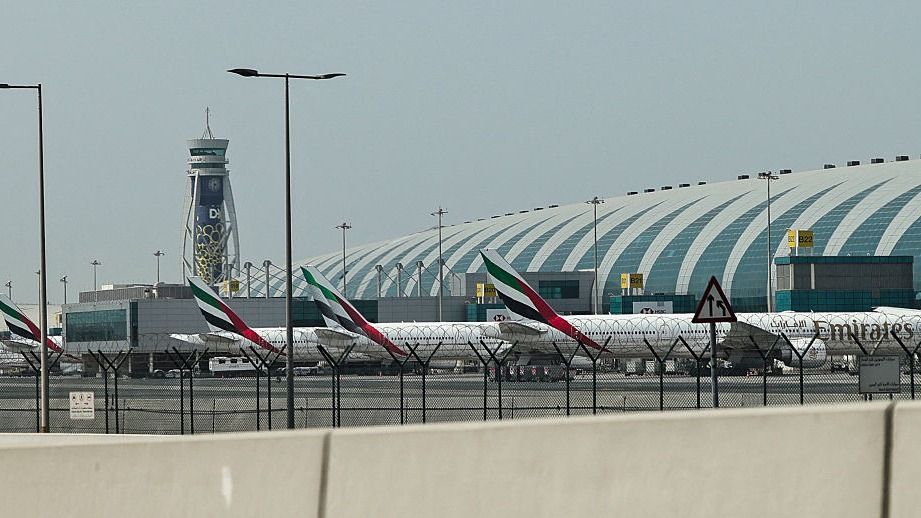
Dubai property and the Iran war — it is the question every investor, every buyer, and every property owner is asking right now in March 2026. The international media ran with crisis narratives. CNBC published "Dubai scrambles to save its reputation." Reuters said investors are stepping back. The Real Deal said the market faced a "possible crisis." And then the actual transaction data came in. AED 11.93 billion in deals for the week of March 2–9. Viewings up 75%. Transaction values rising, not falling. This is the story nobody is telling clearly enough.
Dubai property and the Iran war: the market is holding. Transactions between March 2–9 totalled AED 11.93 billion across 3,570 deals — with values rising over the last three days of the conflict, not falling. Viewings increased 75% compared to the opening days of the unrest. 70% of buyers still plan to purchase within six months. The Dubai real estate stock index fell 20% — but that is equities, not physical property. These are different assets behaving by different mechanics. Physical Dubai property prices have not crashed. The structural fundamentals — zero tax, USD peg, Golden Visa, cash-dominated transactions — are completely unchanged.
The Headlines vs The Data — The Gap Nobody Is Reporting
The gap between what international media is saying about Dubai property and the Iran war, and what the actual transaction data shows, is the widest it has been since COVID. Let us put them side by side.
CNBC published "Dubai scrambles to save its reputation as haven for rich" — a headline that implied the safe haven narrative was collapsing. Reuters quoted an unnamed senior real estate banker saying "investors are not thinking at this stage of investing in the region." The Real Deal called it a "possible crisis" for the market.
The data published by The National the same week: 3,570 transactions. AED 11.93 billion in value. Values rising across the last three days. Viewings up 75%. Lewis Allsopp, CEO of Allsopp & Allsopp, reporting stability in the secondary market.
Both things can be technically true — sentiment is shaken, and transactions are still happening at scale. But the narrative that dominated international coverage was the shock, not the resilience. For buyers reading those headlines from London, Mumbai, or Singapore, the picture they received was distorted. The data picture is significantly more stable.
Why Dubai Stocks Fell But Property Prices Didn't — The Critical Distinction
This is the distinction that most international coverage has completely failed to make — and it is the most important piece of context for anyone asking about Dubai property and the Iran war.
The Dubai Financial Market Real Estate Index fell approximately 20% in five sessions following the conflict escalation, wiping out all 2026 gains. Emaar Properties and Aldar both fell 5% in a single session. Bond prices of major developers dropped. These are real and significant moves.
Physical Dubai property — the apartment, villa, or off-plan unit you actually buy — is a completely different asset class behaving by completely different mechanics.
Stocks trade in milliseconds. They are subject to algorithmic selling, global risk-off flows, margin calls, and daily sentiment swings. A geopolitical shock sends them down immediately because the market is designed for instant price discovery.
Physical property transactions take days to weeks to settle. 86% of Dubai deals are cash-based — meaning no margin calls, no forced selling, no leveraged positions unwinding. Buyers and sellers are making deliberate decisions, not automated ones. The stock market fell 20% in a week. Physical property transaction values rose over the same three days. These numbers are not contradictory. They are measuring entirely different things.
Live Dubai Transaction Data — Week by Week During the Conflict
This is the table that puts the Dubai property Iran war narrative into its clearest possible context. The conflict began in late February 2026. Here is what the transaction data shows week by week.
| Period | Transaction Value | Deal Volume | Price Direction | Sentiment |
|---|---|---|---|---|
| Pre-conflict Feb 2026 |
Peak levels. AED 917B full-year 2025 base. | 270,000+ deals in 2025. Strong momentum entering 2026. | ↑ Rising | Bullish |
| Conflict opens Mar 1–4 |
Pause. High-value transactions deferred. Sentiment shock. | Temporary volume dip as buyers adopt wait-and-see. | → Flat | Cautious |
| Mar 5–9 (latest data) |
AED 11.93B total for Mar 2–9. Values rising over last 3 days. | 3,570 deals. Off-plan commitments largely holding. | ↑ Rising | Stabilising |
| Viewings trend | Not applicable — leading indicator of future transactions. | Up 75% in last 3 days vs opening days of conflict. | ↑ Recovering | Confidence returning |
| Buyer intent survey |
Not applicable. | 70% still plan to purchase within 6 months. | Intact | Resilient |
"While short-term market sentiments may occasionally be influenced by regional developments, such impacts are temporary. Dubai's long-term fundamentals remain intact."
— Farooq Syed, CEO Springfield Properties, March 2026What Every Prior Middle East Conflict Showed About Dubai Property
Dubai property and geopolitical conflict have a long and consistent history together. That history is the most powerful data point available for understanding the Iran war's likely impact.
2006 Lebanon War — Regional tensions. Dubai property continued its upward cycle. Capital from Beirut accelerated inflows into Dubai residential property as Lebanese HNWIs relocated.
2008 Global Financial Crisis — The one genuine crash in Dubai property history. Prices fell 50–60%. The cause was not geopolitical — it was speculative over-leverage, minimal developer regulation, and the collapse of global credit. None of those conditions exist in 2026.
2019 Gulf tensions (drone strikes on Saudi Aramco) — Oil prices spiked. Dubai property barely moved. Buyers from the wider Gulf increased purchases in Dubai as a stable alternative.
April 2024 — Iran launches 300+ drones at Israel — First direct Iranian military attack in history. Dubai sentiment paused. Recovery was complete within weeks. Full-year 2025 property prices rose 19.8%.
October 2024 — Israel retaliates inside Iran — Same pattern. Brief pause. Full recovery. Market closed 2025 at all-time highs.
The pattern across every episode: sentiment pauses, transactions slow briefly, prices hold, recovery follows faster than the consensus expected. The buyers who moved during the pause outperformed those who waited for certainty.
Who Is Still Buying Dubai Property Right Now
The composition of buyers active in the Dubai property market during the Iran war reveals something important: the buyers who understand the structural case are accelerating, not pausing.
Conflict-adjacent capital — HNW inflows into Dubai rose 46% year-on-year in 2025, with USD 63 billion arriving from conflict-affected jurisdictions including Iran, Israel, Lebanon, Russia, and Ukraine. The Iran war is creating exactly the same dynamic — capital from the conflict zone itself is seeking a neutral, stable destination. Dubai is that destination.
Indian HNWIs — The largest foreign buyer group at 20–22% of all foreign purchases. Indian capital has historically accelerated into Dubai during regional instability. The India-UAE CEPA agreement reduces bilateral friction, and the AED-INR relationship in current market conditions is favourable for Indian buyers.
European long-term investors — British, German, and French buyers with 5–10 year horizons are treating the current pause as an entry window. These are not speculative buyers — they are end-users and long-term investors who have already made the structural decision and are using sentiment disruption to their advantage.
Relocating families and Golden Visa applicants — The UAE's 10-year Golden Visa programme continues to attract families seeking a stable second base. The conflict has not changed the visa programme, the tax environment, or the lifestyle proposition.
Dubai Property & Iran War — 8 Direct Questions Answered
The data so far says no broad price fall. Dubai property transactions between March 2–9, 2026 totalled AED 11.93 billion across 3,570 deals — with values rising over the last three days of the conflict. Viewings increased 75%. 70% of surveyed buyers still plan to purchase within six months. S&P Global Ratings notes that luxury could soften if the conflict persists for an extended period, and smaller, less established developers face more exposure. But the structural fundamentals — zero tax, USD peg, Golden Visa, 86% cash transactions — are completely unchanged.
Source basis: The National / DLD March 2–9 data, S&P Global Ratings UAE March 2026, Betterhomes market updateDubai property has maintained transaction activity, stable prices, and rising viewings through the active conflict period. The UAE government has maintained full operational continuity. Dubai International Airport is operating. The Dubai Land Department is registering transactions every day. The legal and regulatory framework is unchanged. 86% of Dubai property deals are cash-based — eliminating the forced-selling risk that causes price crashes in leveraged markets.
Every prior episode of regional conflict — 2006, 2014, 2019, 2024 — resulted in a temporary sentiment pause followed by resumed appreciation. The current data shows the same pattern already beginning. The buyers who moved during the 2024 conflict period entered at better prices than those who waited for the all-clear.
Source basis: DLD transaction data, UAE government operational updates, Knight Frank cash transaction data 2025These are two completely different assets. Dubai real estate stocks — Emaar, Aldar — are liquid instruments traded in milliseconds, subject to algorithmic selling, global risk-off flows, and instant sentiment repricing. A geopolitical shock triggers automated selling in seconds.
Physical property transactions take days to weeks to settle. Buyers are predominantly cash-based with no margin calls. Pricing is determined by supply, demand, and fundamentals — not by daily sentiment algorithms. The DFM Real Estate Index falling 20% in a week and physical property transaction values rising over the same three days are not contradictory — they are measuring entirely different things. Anyone conflating the two is comparing apples to aircraft carriers.
Source basis: DFM Real Estate Index data via Trading View, DLD physical transaction data, Knight Frank cash deal analysisIn April 2024, Iran launched 300+ drones and missiles at Israel — its first direct military attack in history. Dubai property sentiment paused briefly. Full-year 2025 prices rose 19.8% and transactions hit AED 917 billion — all-time records. In October 2024, Israel retaliated with strikes inside Iran. Identical pattern: brief pause, full recovery.
In 2022, the Russia-Ukraine war — another regional conflict with Gulf implications — drove Russian and European capital directly into Dubai prime property, causing a 44% price surge in prime areas. The consistent historical pattern is clear: conflict elsewhere creates motivated capital seeking neutral destinations, and Dubai is structurally that destination.
Source basis: ValuStrat December 2025 data, DLD full year 2025, CBRE prime market data 2022–2023No. HNW inflows into Dubai rose 46% year-on-year in 2025, with USD 63 billion arriving from conflict-affected jurisdictions — Iran, Israel, Lebanon, Russia, and Ukraine. The Iran war is accelerating this mechanism, not reversing it. Capital from the conflict zone itself is seeking neutral, tax-free, stable destinations. Dubai is structurally that destination. Investment advisors note that capital at the HNW level tracks governance strength, tax efficiency, and policy stability — all of which remain completely unchanged.
Elon Musk stated on X post-strikes that Dubai and the UAE are "objectively safer and better run" — a view that resonated strongly with the UHNWI community and was widely shared. The UAE was on track to attract a record 9,800 relocating millionaires in 2025 — more than any other country on earth. That pipeline has not materially changed.
Source basis: APIL Properties HNW inflow data 2025, Knight Frank Wealth Report, Elon Musk X post March 2026Off-plan commitments are largely holding, with developers offering flexible payment plan structures to support buyer confidence through the uncertainty period. RERA escrow regulations mean all buyer deposits are legally protected regardless of geopolitical developments — this is a structural protection that did not exist in 2008. Off-plan in quality master-planned communities — Sobha, DAMAC, Emaar — is one of the most insulated segments because buyers are 3–5 years from delivery. Conflicts of this nature have historically resolved well before handover dates.
Source basis: The National Lewis Allsopp comment, RERA Escrow Regulation, developer payment plan updates March 2026For villas, prime waterfront, and quality off-plan — the data does not support delay. The Dubai property market during the Iran war shows rising transaction values, recovering viewings, and intact buyer intent. The historical record is consistent: every prior conflict-driven pause in Dubai created a buying window that closed faster than buyers expected. Those who moved during the 2020, 2022, and 2024 uncertainty periods all outperformed those who waited for the all-clear.
The one nuance: mid-market apartments in oversupplied communities — where supply pressure already existed before the conflict — may see combined pressure from both supply and sentiment. In those specific communities, patience has more merit. For everything else, the fundamentals are unchanged and the window is open right now.
Source basis: DLD historical price index 2020–2026, Knight Frank conflict cycle analysis, Urban Terrace advisory dataParadoxically, prolonged global instability accelerates capital flows into Dubai rather than reducing them. During the Russia-Ukraine conflict, Dubai prime property rose 44% as capital flooded in from conflict-adjacent markets. During COVID, Dubai recovered in 12–18 months and then surged 70% between 2021 and 2025. The current conflict is bringing capital from Iran, Israel, Lebanon, and conflict-adjacent markets directly into Dubai — the same mechanism that drove the record 2022–2025 cycle.
Dubai's Urban Master Plan 2040 targets a population of 5.8 million from approximately 3.8 million today — a 53% increase requiring sustained housing delivery for decades. The UAE government has AED 71 billion allocated in the 2025 fiscal budget for infrastructure, education, and social development. The structural demand story is years from resolution. The Iran war is a chapter in that story, not the ending.
Source basis: Dubai Urban Master Plan 2040, UAE Ministry of Finance Budget 2025, CBRE Dubai long-term demand analysisDubai property and the Iran war: the market is holding. Not because the conflict is not serious — it is. But because Dubai's property market is structurally designed to absorb exactly this type of shock and emerge with its fundamentals intact. AED 11.93 billion in transactions. Viewings up 75%. 70% of buyers still committed. Values rising over the last three days of active conflict. The data is speaking clearly.
The media ran with the stock market fall. The stock market fall is real — equities repriced in seconds as risk-off algorithms fired. Physical property is a different asset. It is repriced by people making deliberate decisions with their own capital, on their own timelines, based on fundamentals that have not changed. Zero tax. USD peg. Golden Visa. 86% cash transactions. 180+ nationalities. A government committed to 5.8 million people by 2040. Every prior conflict in this region has been a chapter, not an ending. This one will be too. Position accordingly.
The window is open right now — while others are reading headlines.